A professional job title can make a lead look promising. It does not establish that the company needs your product or that the person is ready to evaluate it.
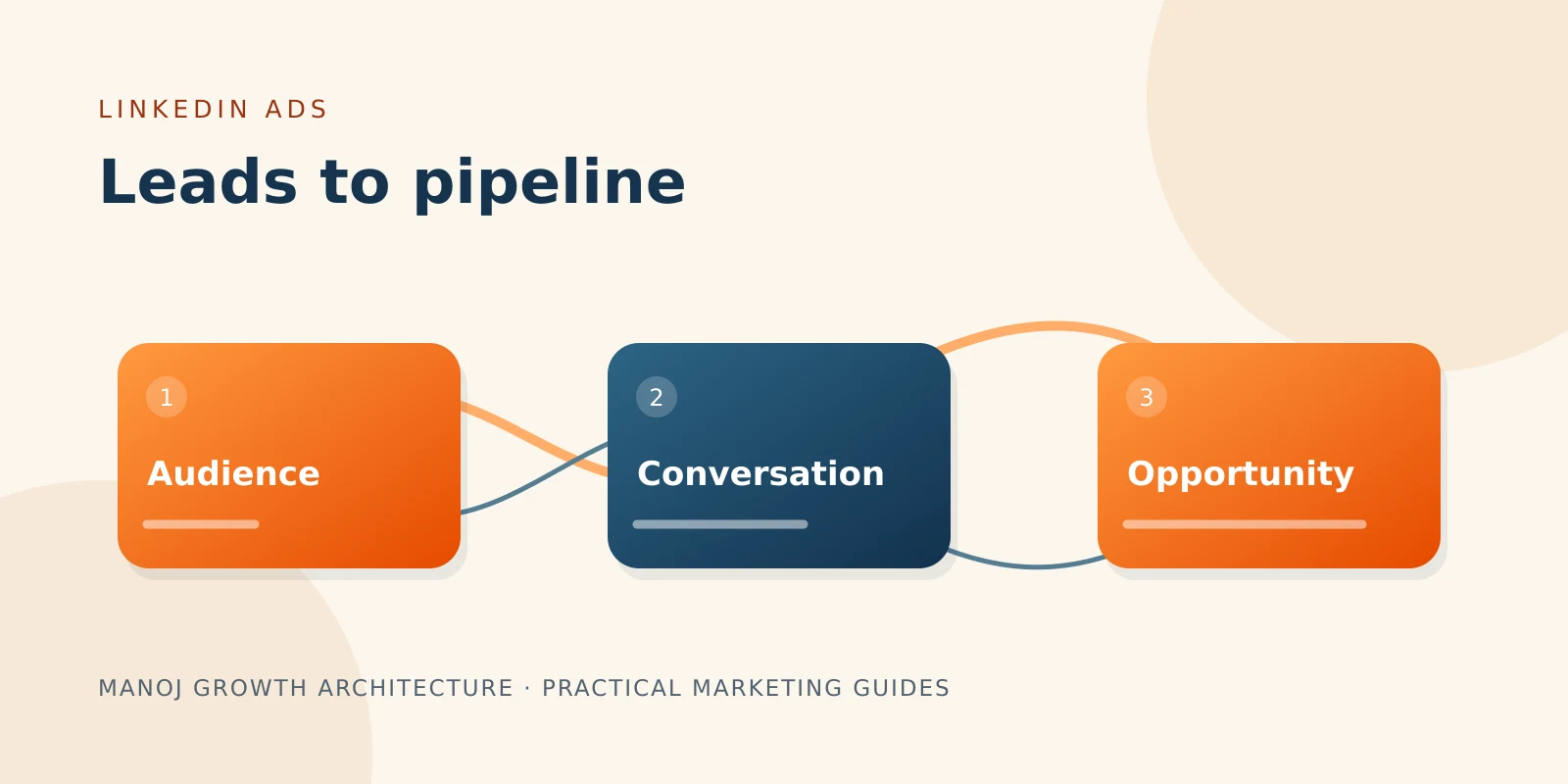
If LinkedIn campaigns produce contacts but few opportunities, examine the connection between audience, offer, and sales readiness.
Define a useful lead with sales
Agree on the company characteristics, problem, and buying context that make an enquiry worth pursuing. Include a reason to reject or nurture a contact so reporting stays consistent.
Then compare those criteria with actual submissions. Are the people relevant but too early, or are the companies fundamentally unsuitable?
Match the offer to readiness
A checklist or research report can attract someone learning about a problem. A product demo asks for a more immediate evaluation.
Treating both as equivalent sales requests creates misleading expectations. Give educational-content leads a relevant next resource or an invitation to discuss a specific problem. Prioritise explicit demo requests for direct sales follow-up.
Make the next step clear
Explain what someone receives and whether a sales conversation is involved. Keep the ad, form, and confirmation consistent.
For example, “Get the warehouse planning checklist” and “Book a warehouse software demonstration” serve different purposes even when shown to the same operations manager.
Review qualification, not just submissions
Track qualified leads, held meetings, opportunities, and customers by campaign. Compare groups old enough to have progressed through your normal sales cycle.
LinkedIn documents a qualified-leads optimization option using qualified events from Conversions API or CRM Sync. If using it, follow the setup requirements and avoid duplicate event sources. LinkedIn: qualified leads optimization
Separate audience fit from buying intent
An HR director at the right-sized company may match your target profile perfectly and still have no current buying project. Conversely, a manager with a less senior title may be actively researching a purchase on behalf of a wider team.
Use job information as one part of qualification. Add the company's problem, existing approach, buying trigger, and evaluation timeframe when that information becomes available. This makes it easier to distinguish promising early interest from an unsuitable contact.
For example, payroll software for companies opening a second location can be explained around that operational challenge. “Simplify HR” is broader and may attract people with very different needs.
Compare campaigns using the same sales stage
Imagine two campaigns each spending ₹60,000. A report download generates 120 leads at ₹500. A demo campaign generates 30 at ₹2,000.
Suppose six report-download leads and ten demo leads become qualified opportunities. The illustrative cost per opportunity is ₹10,000 for the report campaign and ₹6,000 for the demo campaign.
That does not establish a universal winner. The report campaign may create later opportunities that have not appeared yet. Compare groups that have had similar time to progress, and include opportunity quality and eventual wins. The point is to avoid comparing an early educational action with a sales request solely on CPL.
Use follow-up that reflects the offer
For a guide download, deliver the promised resource first. A relevant follow-up might explain one finding, provide an example, or invite the reader to assess their own process. Give them a reason to continue before asking for a meeting.
For an explicit demo request, provide a clear booking route, assign an owner, and preserve context. Asking the prospect to explain everything again after completing a detailed form adds avoidable work.
In both cases, respect the expectations and contact preferences communicated during signup. A nurture sequence is useful when it answers the next buyer question, rather than repeating a meeting request.
Build a simple pipeline review
| Stage | What to record | What it helps explain |
|---|---|---|
| Submission | Offer and campaign source | What attracted the contact |
| Qualification | Fit, need, and reason for rejection | Whether the campaign reaches useful buyers |
| Meeting | Booked and actually held | Whether interest becomes a conversation |
| Opportunity | Defined need and sales acceptance | Whether conversations become buying projects |
| Outcome | Won, lost, or deferred, with reason | Whether acquisition supports revenue |
Use stage definitions agreed with sales. Do not let a campaign look stronger merely because its leads are labelled more generously.
When should you change targeting?
Change it when evidence shows the wrong companies or functions are responding. If the company fit is strong but people are too early, review the offer and expectations first. If suitable prospects request demos but nobody contacts them reliably, repair routing before narrowing the audience.
Review a sample of actual contacts and opportunities alongside aggregate reports. Segmenting by offer, company type, and sales stage can reveal a mismatch hidden inside the total lead count.
What to prepare before the next campaign
- One customer segment and a concrete problem.
- An offer appropriate to that person's stage.
- Clear expectations about what happens after submission.
- A named owner for follow-up.
- Consistent qualification and opportunity definitions.
- A reporting window that accounts for the sales cycle.
A campaign becomes easier to improve when you can explain how each contact progressed and where the process stopped.
Try this next: follow one recent group of leads from submission to its current sales stage. Find the largest drop-off. Adjust targeting when company fit is wrong, the offer when intent is mismatched, or follow-up when suitable buyers are being lost.